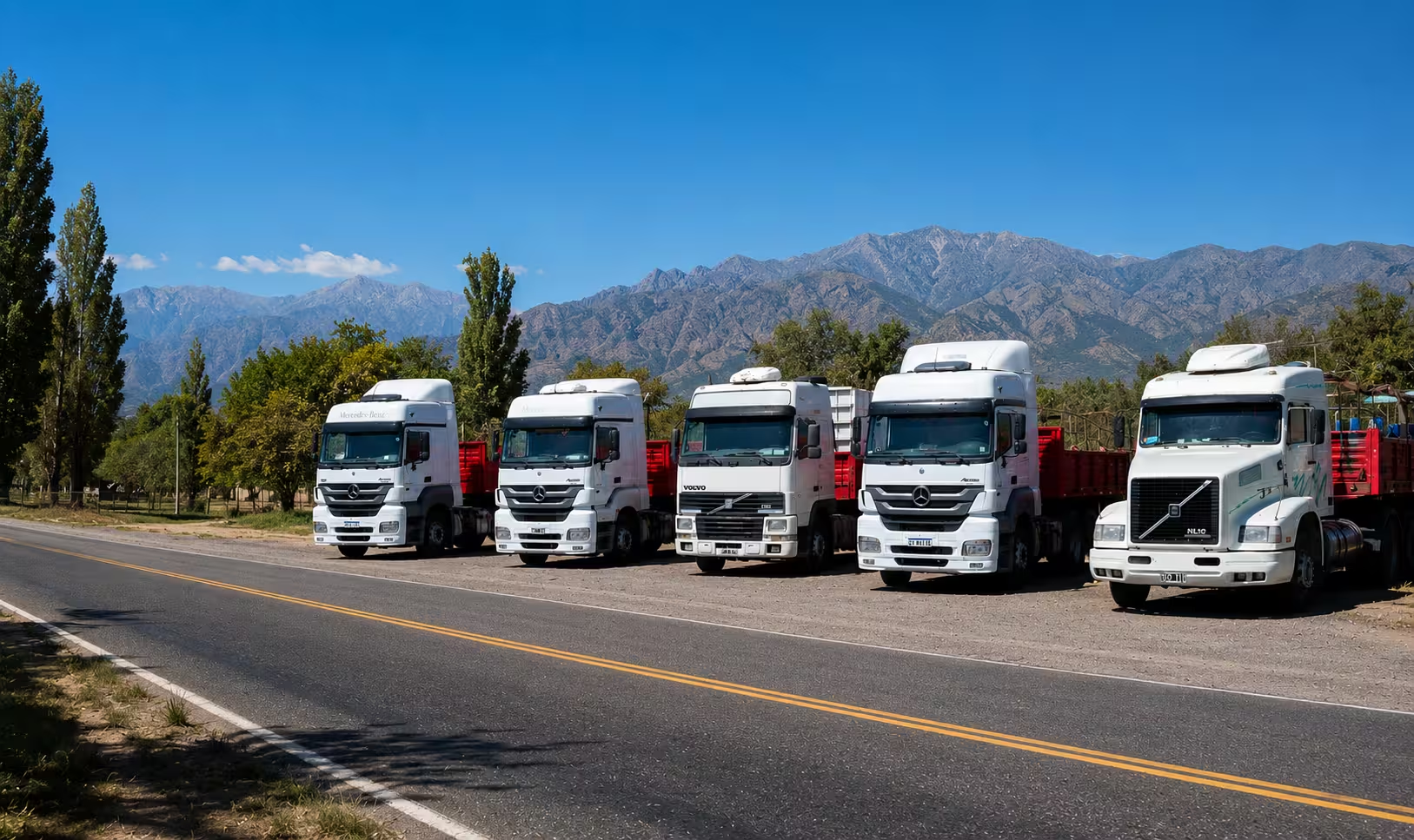
Wine Transport from Mendoza: A Guide for Wineries That Export or Distribute
How to plan wine logistics from Mendoza: seasons, destinations, cargo types and keys for port export or domestic-market distribution.
Mendoza produces 70% of Argentina's wine
To understand wine logistics, you have to start from a figure that changes everything: Mendoza concentrates 70% of national wine production. That means most of the country's wine freight originates in the province, and the carriers operating from here are the ones who sustain the distribution chain.
We have spent decades working with wineries of every size. In this article we tell you what you need to know to plan your wine logistics.
The four seasons of wine logistics
The wine industry has a very marked seasonality. Understanding it is the key to not running out of trucks at the moments you need them most.
January–February: Pre-harvest
The winery starts moving before the harvest. The freight of this period is mainly inputs: capsules, labels, cork, empty bottles, barrels and yeast. Many of these materials come from Buenos Aires or are imported. It is a good time to coordinate logistics contracts in advance.
March–May: Harvest
The peak. Demand for trucks in Mendoza during the harvest is the highest of the year. Harvest bins, harvest machinery, packaging material and the first movement of new wine. If you do not have freight coordinated before March begins, you will compete with the whole industry for the same trucks.
June–September: Post-harvest
The previous harvest's wine is bottled and ready to ship. It is the busiest season for domestic-market distribution: pallets to Buenos Aires, Córdoba, Rosario and the country's interior. Export movement for the northern hemisphere also begins.
October–December: Export
The European and U.S. markets receive the previous harvest's wines for the holidays. It is the busiest time at the Port of Buenos Aires for the winery. Freight to Dock Sud concentrates in these months, and the availability of trucks with a confirmed loading date is a critical factor.
Domestic market vs. export: two different logistics logics
Domestic-market distribution
Domestic-market freight has as its main destinations Buenos Aires, Córdoba, Rosario, Mendoza city and the country's interior. The characteristics are:
- Cargo type: pallets of bottled wine (box, bottle, tetra brik)
- Volume: from half a truck to a full truck
- Frequency: high — a mid-sized winery may need several monthly shipments
- Destination: distributors, importers, supermarkets, restaurants (generally at logistics centers or warehouses, not direct home delivery)
Important: at Rutas del Sur we do not do distribution in the Buenos Aires suburbs or home delivery in urban areas. Our freight reaches logistics centers, warehouses and industrial clients.
Export via the Port of Buenos Aires
Export freight has its own dynamic. The timing is set by the ship, not the client. When there is a shipment date, the truck has to be at the port before that date, no excuses.
The process steps:
- The winery coordinates the DJE (Export Sworn Declaration) with the customs broker
- The carrier receives the order with a deadline for entry to the port
- The truck takes the cargo to the bonded warehouse or directly to the port depending on the type of operation
- The broker confirms the cargo to the ship
At Rutas del Sur we operate to the Port of Buenos Aires (Dock Sud), the Port of La Plata and free-trade zones (Pilar, Luján). We coordinate directly with the broker when necessary.
Export via Chile — Cristo Redentor Pass
The Chilean market is a natural destination for Mendoza wine: the geographic proximity makes crossing via the Cristo Redentor Pass competitive against the maritime route.
To export to Chile you need:
- SAG documentation: Chile's Agricultural and Livestock Service requires a certificate of origin for the wine
- Certificate of analysis: imported wine must comply with Chilean oenological regulations
- DTA or entry declaration: customs procedure on the Chilean side
We have operated on this corridor for over 40 years. The crossing has its seasonality (more risks in winter due to pass closures) and must be planned considering the state of the corridor.
The most common mistakes in wine logistics
Not planning the harvest in advance
It is the most frequent mistake. Every March, wineries that did not reserve trucks find themselves paying premiums to ship the harvest. The solution is simple: coordinate with the carrier in December–January to guarantee availability at the peak.
Confusing distribution carriers with export carriers
Not all carriers are authorized to operate at the port or have the documentation needed for export. If you need the truck to enter the bonded warehouse or the port, confirm that the carrier has the corresponding authorization.
Ignoring the effect of temperature on long transits
High-end wines can suffer damage from temperature variations on summer transits. If the product justifies it, ask about temperature-controlled transport options.
The logistics that grows with your winery
A winery's volume changes. What works for 50,000 cases a year is not the same as for 200,000. A good carrier not only moves your cargo today — it can also grow in capacity and frequency as your business requires.
At Rutas del Sur we work with wineries from the first export pallet to high-frequency annual contracts. That kind of relationship is built over time and through consistency of service.
Do you have a winery and need to plan logistics for the next season? Visit our transport for wineries page or check the Mendoza–Buenos Aires route for export.