Folding House vs. Traditional Construction: What Each One Is For
When a folding house is worth it and when conventional construction is. Analysis of costs, times, mobility and real use cases in Argentina.
Two solutions for different needs
The question "is a folding house or building better?" is usually framed wrong. They are not interchangeable options: they respond to different needs and have advantages that do not overlap.
This article compares both options directly so you can decide with real information.
What a folding modular house is
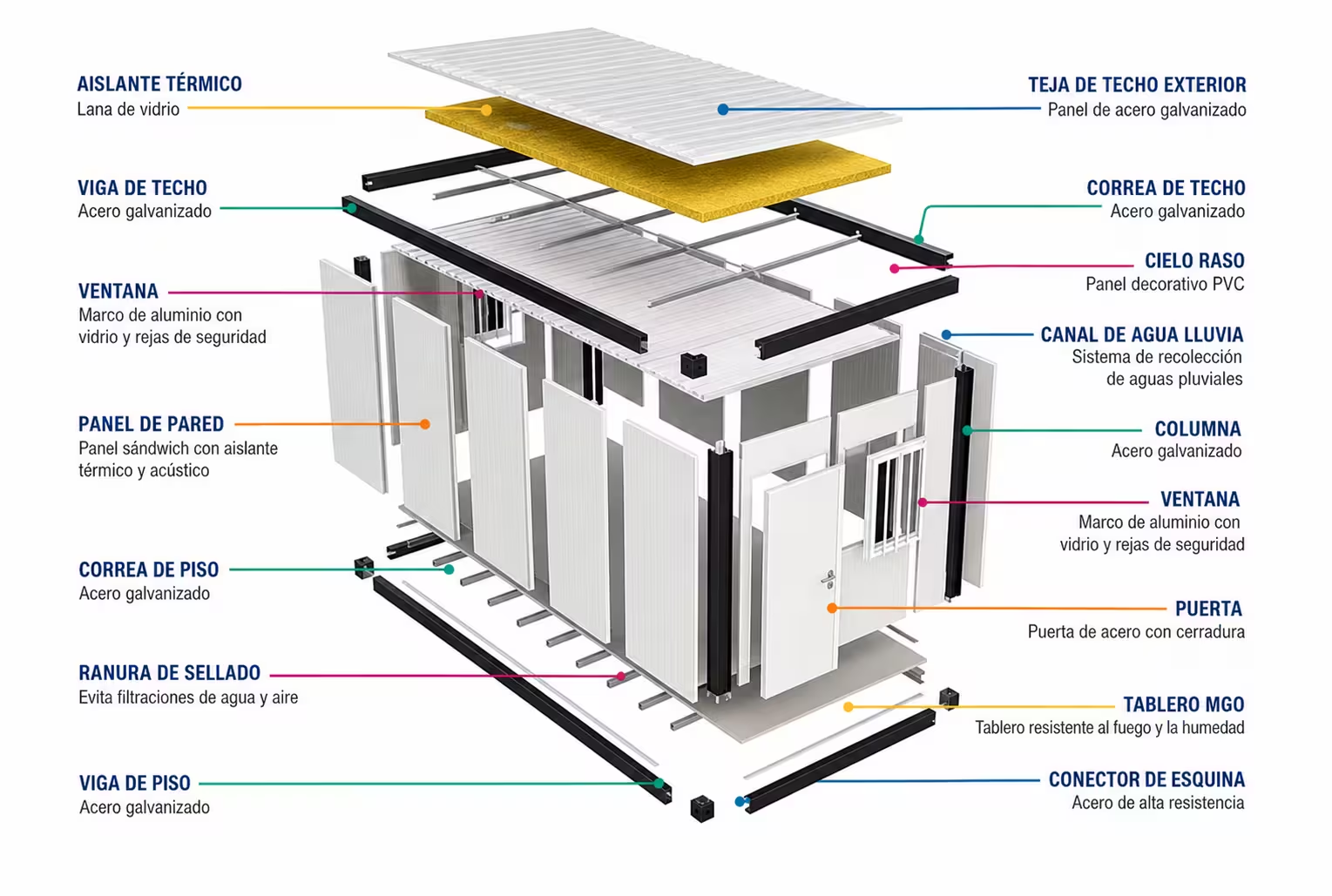
A folding house (or folding housing module) is a Q235B steel structure with a 50 mm rock-wool panel (65 kg/m³, Class A) designed to collapse into transport position and deploy at destination. The key features:
- It installs in 15 minutes with no civil works
- It is transported folded (up to 12 units in a 40-foot container)
- It can be relocated: when the project ends, it folds and goes to the next destination
- CE, ISO 9001, SGS certification
- Standard surface: 13.4 m² (folding) or 34.6 m² (expandable)
What traditional construction involves
Conventional construction involves foundations (slab, cesspit or piles depending on the terrain), structure (brick, concrete or wood), roofing, internal installations and finishes. Its features:
- Construction time: weeks to months depending on the surface
- Requires municipal approval and plans
- It is permanent: it cannot be moved
- Requires a prepared base (own lot, permits)
- May have more interior design flexibility in the long term
Direct comparison
| Aspect | Folding house | Traditional construction |
|---|---|---|
| Installation time | 15 min – 2 people | Weeks or months |
| Civil works needed | No (leveled base) | Yes (slab, foundations) |
| Mobility | High — folds and moves | None — permanent |
| Available surface | 13.4 m² (folding) / 34.6 m² (expandable) | Flexible by design |
| Municipal permits | Lower requirement (temporary structure) | Yes — plans and approval |
| Useful life | 15–20 years | 30–60 years |
| Customization | Limited to available modules | High |
| Resale return | Yes — the module has resale value | Value tied to the land |
When the folding house is worth it
1. Temporary projects with an end date
Construction sites, mining camps, lithium projects, oil & gas operations, long-duration events. When the project ends, the module is not demolished: it folds and goes to the next destination. For a construction company working multiple simultaneous sites, the module is an investment amortizable over dozens of projects.
2. Remote areas without infrastructure
Farms, rural establishments, mountain areas or places without access to construction services. The folding house arrives by truck, needs no crew of masons or materials to be brought to the site. Two people and 15 minutes.
3. Urgent need for space
If you need a habitable space in the short term —an office, a dormitory, a staff dining hall— the folding house solves it the same day of delivery. Construction takes months.
4. When construction cost is prohibitive
In high-mountain areas, the cost of bringing materials and labor can triple the cost of a normal construction. At 3,500 meters, a "cheap house" can cost more than the same surface in Buenos Aires. The folding module comes pre-manufactured: the only variable cost is the freight.
5. No own land or rented land
If the space is rented —a plot within a construction site, for example— building makes no sense. The module is yours and goes with you when you leave.
When traditional construction is worth it
1. Permanent project on own land
If you have your own land and the project is long-term (10+ years), construction can amortize better because the property value includes the improvement.
2. Larger surface than achievable with individual modules
For homes of 100+ m² in a single unit, traditional construction is still the dominant option (although expandable modules and joining several modules can solve up to 60–80 m²).
3. Extreme design customization
If the project requires a very specific layout that no standard module covers, custom construction has more design flexibility.
4. When mortgage financing is available
Housing modules are usually paid in cash. If you have access to mortgage credit for construction, the equation changes because the construction cost is financed at a subsidized rate over years.
The initial-cost trap
When comparing a USD 6,500 folding house with a USD 15,000 construction, it seems the latter is more expensive. But there are variables that change the analysis:
- The folding house can be used in multiple sites and projects. Amortized over its useful life, the cost per project is a fraction of the original value.
- The construction only has value in one place. If the project ends, the construction stays (or must be sold or demolished).
- The cost of time: construction ties up capital for months before being operational. The module is operational the day it arrives.
Questions to decide
Before choosing, answer these questions:
- Does the project have an end date? → If yes, module.
- Will the space need to move in the future? → If yes, module.
- Do you have time to build? → If no, module.
- Is the site remote or hard to access? → Module.
- Do you have your own land and the use is forever? → Consider construction.
If you want to know the technical specifications of the folding module available in Argentina, you can see the full module sheet. For a quote on your project, contact us directly via WhatsApp or through the quote form.